
Hydrangea (Hydrangea macrophylla)
Hydrangeas produce large, full clusters of flowers in blue, pink, white, purple and green, used by florists to add volume and luxury to bouquets.
Overview
Hydrangea is a genus of around 75 species of flowering shrubs native to Asia and the Americas. The florist's favourite, Hydrangea macrophylla (bigleaf hydrangea), originates from Japan and produces huge, rounded flower heads that instantly add fullness and luxury to any arrangement.
Appearance
Hydrangeas have large, serrated, glossy green leaves. The flower heads are made up of many small florets. There are two main forms:
- Mophead – dense, ball-shaped clusters.
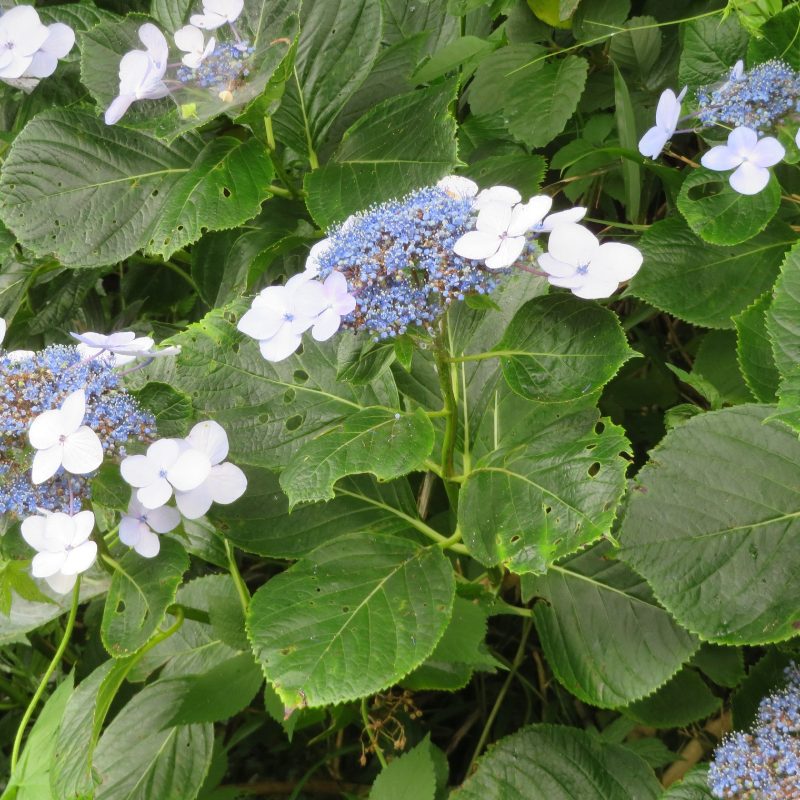
- Lacecap – flat clusters of tiny fertile flowers ringed by larger showy florets.
Colour & Soil pH
The colour of bigleaf hydrangeas depends on soil chemistry: in acidic soil (pH below 6) aluminium is available and flowers turn blue; in alkaline soil they turn pink. White varieties stay white regardless. As they age, many blooms develop antique green, burgundy or “vintage” tones.
Meaning & Symbolism
Hydrangeas symbolise heartfelt emotion, gratitude and abundance. Blue hydrangeas express understanding and apology, pink stands for love and sincere emotion, and white for purity and grace. It is the traditional 4th wedding anniversary flower.
Use in Bouquets
A single stem fills a lot of space, so hydrangeas are used as a mass or base flower in bridal bouquets, centrepieces and luxury hand-tied designs. They pair beautifully with roses, peonies, lisianthus and eucalyptus.
Care & Vase Life
- Hydrangeas drink through their petals and stems – mist the heads daily.
- Cut stems at a sharp angle; many florists also split the woody stem end.
- Revive a wilted head by fully submerging it in cool water for 30–60 minutes, then recutting.
- Typical vase life: 5–9 days.
Fun Facts
- The name comes from Greek hydor (water) and angeion (vessel) – a nod to its thirsty nature and cup-shaped seed capsules.
- Hydrangea heads dry beautifully and can be kept for years in dried arrangements.