asfafsdf (fdsfdsf)
fdsfdsffffdsfdsfdsafsdf

Lilies (Lilium)
Lilies are flowering plants belonging to the genus Lilium in the family Liliaceae. Known for their elegant shape, vibrant colors, and fragrant blooms, lilies are among the most popular ornamental flowers grown in gardens and used in floral arrangements around the world.
What Are Lilies?
Lilies are perennial plants that typically grow from bulbs. Depending on the species and variety, their flowers can appear in shades of white, pink, yellow, orange, red, and other colors. Lily flowers commonly have six petal-like tepals and prominent stamens, giving them their distinctive appearance.
Scientific Classification
- Common Name: Lily
- Scientific Name: Lilium
- Family: Liliaceae
- Plant Type: Perennial flowering plant
- Native Range: Parts of the Northern Hemisphere
Types of Lilies
The genus Lilium contains many species and cultivated varieties. Garden lilies are also commonly grouped into horticultural divisions based on their characteristics, flower shape, fragrance, and growing habits.
- Asiatic Lilies: Known for their bright colors and generally low fragrance.
- Oriental Lilies: Famous for large, fragrant flowers and attractive colors.
- Trumpet Lilies: Produce large, trumpet-shaped flowers and are often strongly fragrant.
- Martagon Lilies: Have distinctive downward-facing flowers with recurved petals.
- Longiflorum Lilies: Known for their elegant white, trumpet-shaped flowers.
- LA Hybrids: Hybrids valued for their large flowers, strong stems, and range of colors.
What Do Lilies Look Like?
Lily plants usually have upright stems surrounded by narrow or lance-shaped leaves. Their flowers may be trumpet-shaped, bowl-shaped, or recurved depending on the species or hybrid. Many varieties produce large, showy blooms that make them popular in gardens and bouquets.
Colors of Lilies
Lilies are available in a wide range of colors. Common flower colors include white, pink, yellow, orange, and red. Some varieties have contrasting spots, stripes, or edges that add to their ornamental appeal.
When Do Lilies Bloom?
Most garden lilies bloom during spring or summer, although the exact flowering period depends on the species, variety, climate, and growing conditions. Different lily varieties can be planted to provide flowers at different times throughout the growing season.
How to Grow Lilies
Lilies generally grow well in fertile, well-drained soil and benefit from adequate sunlight. Many varieties perform best when their roots remain cool while the stems and flowers receive sufficient sunlight.
- Choose a location with suitable sunlight for the lily variety.
- Plant lily bulbs in well-draining soil.
- Water regularly while avoiding waterlogged soil.
- Add organic matter to improve soil quality when necessary.
- Apply a suitable fertilizer during active growth.
- Remove spent flowers to maintain the appearance of the plant.
Uses of Lilies
Lilies are widely grown as ornamental plants and are commonly used in gardens, floral arrangements, bouquets, events, and decorative displays. Their large flowers and, in many varieties, pleasant fragrance make them especially popular with florists and flower enthusiasts.
Lilies in Flower Arrangements
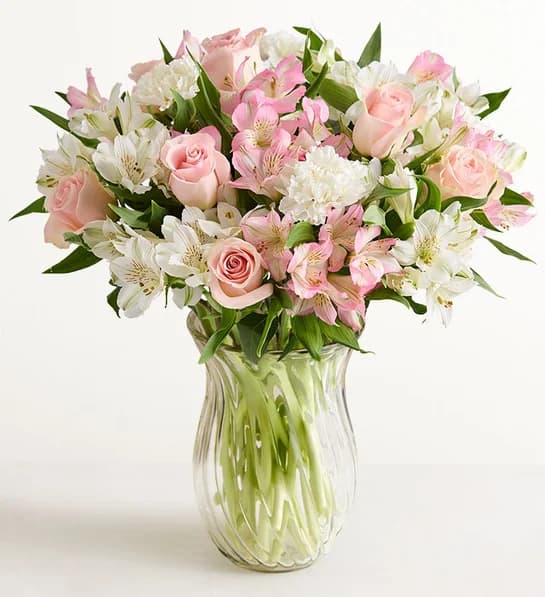
Lily flowers can be used as focal flowers in bouquets because of their large blooms and distinctive shape. They are often combined with roses, carnations, chrysanthemums, greenery, and other seasonal flowers to create arrangements for celebrations and special occasions.
Meaning and Symbolism of Lilies
Lilies have different symbolic meanings depending on their color, cultural tradition, and occasion. White lilies are often associated with purity and elegance, while pink lilies may be associated with affection and admiration. Because symbolism varies across cultures, lilies can be appropriate for many different occasions and celebrations.
Are Lilies Toxic to Pets?
Some plants commonly called lilies can be highly toxic to cats. In particular, true lilies in the genus Lilium and daylilies (Hemerocallis) can cause serious poisoning in cats if parts of the plant are ingested. Pet owners should keep potentially toxic lilies away from cats and contact a veterinarian immediately if exposure is suspected.
Interesting Facts About Lilies
- Lilies belong to the plant family Liliaceae.
- The scientific genus name for true lilies is Lilium.
- Many lilies grow from underground bulbs.
- Lily flowers commonly have six petal-like tepals.
- Some lily varieties are highly fragrant, while others have little or no fragrance.
- Lilies are widely cultivated as ornamental garden and cut flowers.
Frequently Asked Questions About Lilies
Are lilies perennial flowers?
Yes. True lilies in the genus Lilium are perennial plants that grow from bulbs and can return year after year under suitable growing conditions.
Do lilies have a fragrance?
Some lilies are strongly fragrant, particularly many Oriental and Trumpet lilies, while other varieties have little or no noticeable scent.
What colors do lilies come in?
Lilies are available in many colors, including white, pink, yellow, orange, and red. Some varieties also have spots, stripes, or contrasting patterns.
Can lilies be grown in pots?
Yes. Many lily varieties can be grown in containers when the pot provides adequate drainage, sufficient space for the bulb and roots, and suitable growing conditions.
Conclusion
Lilies are elegant perennial flowering plants valued for their colorful blooms, distinctive shapes, and, in many varieties, beautiful fragrance. With numerous species and cultivated hybrids available, lilies can be enjoyed in gardens, containers, bouquets, and floral arrangements.